

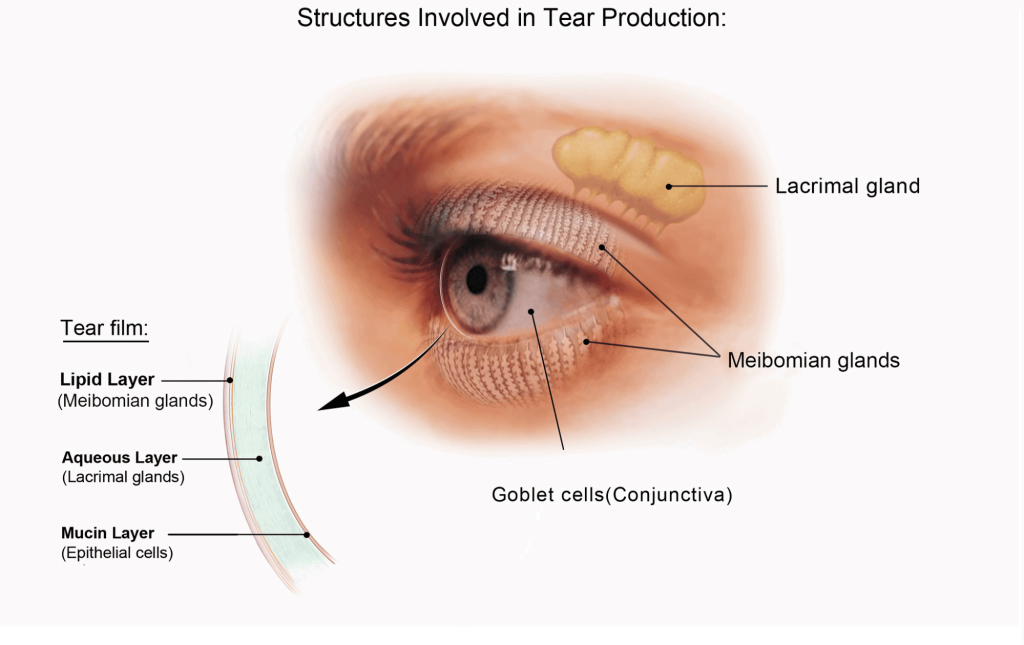
The most common cause of Dry Eye Disease is Meibomian Gland Dysfunction (MGD), where the Meibomian glands fail to produce the oil needed to maintain optimal tear quality. Without the oil layer, the water based tear layer will evaporate quickly causing dryness, discomfort, irritation, and potential vision and eye health problems.
Inadequate Oil Production
Meibomian Gland Dysfunction (MGD) is a condition where the oil glands in the eyelids become clogged and unable to produce the needed oil, causing the glands to die down and become shortened. MGD is asymptomatic until very late stages and is a chronic and progressive problem. Hence, proper early diagnosis and treatment is essential to restore the tear film and eye health. Dry Eye Disease is often caused by MGD. Insufficient oil production leads to tear film evaporation. The eyes are not properly protected as the tear film carries antigens, our immune system. The eyes are not properly lubricated as well, leading to a dry, burning, sandy, or scratchy feeling. Reduced oil production can also be caused by aging, medications, environmental factors, hormonal deficiencies, autoimmune diseases or other underlying health conditions.
Imbalanced Tear Quality
Even if tear production is sufficient, tears may lack the proper balance of oil (from MGD), water, and mucus. This imbalance can cause tears to evaporate or leave the eyes too quickly, leaving the eyes unprotected, vulnerable, and more susceptible to dryness and irritation.
Common Triggers
Environmental factors such as air conditioning, smoking, or long periods of screen time can exacerbate dry eye disease. Additionally, underlying conditions like blepharitis (eyelid inflammation) or meibomian gland dysfunction (blocked oil glands in the eyelids) can contribute to the problem.
Impact on Daily Life
Dry eye disease can make it uncomfortable to read, work on a computer, drive, or even be in windy or dry conditions. If left untreated, the discomfort will increase and may lead to more severe eye conditions. Quality of life is also affected, as it is quite cumbersome to do home maintenance with hot compresses, lid hygiene, and lubricant eye drops multiple times daily.
What is Dry Eye Disease?
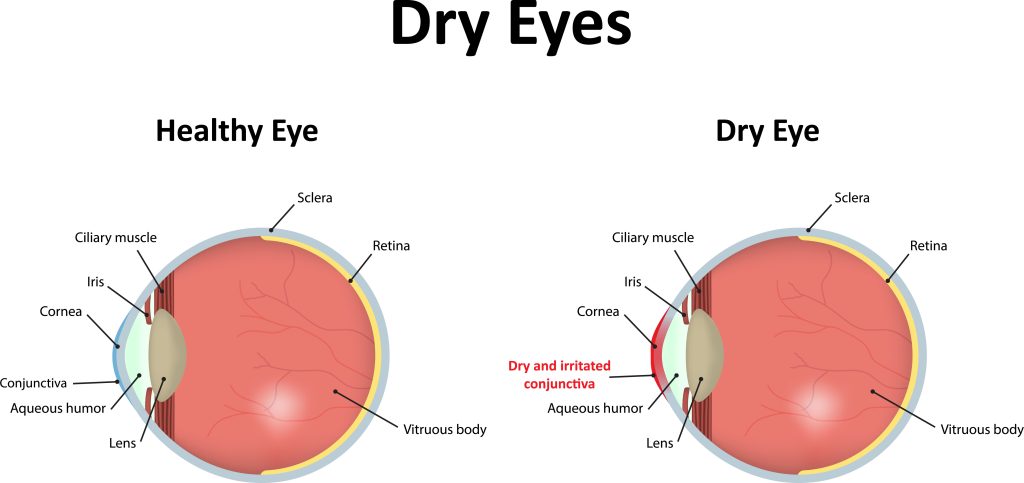
Dry eye disease refers to the discomfort, irritation, and sensitivity caused by insufficient tear production or poor tear quality and quantity. It is often linked to issues with the Meibomian glands. These glands, located in the eyelids, produce the oils that stabilize the tear film and prevent tears from evaporating too quickly. When these glands become clogged or dysfunctional, the eyes lose essential moisture, leading to redness, stinging, a gritty sensation, blurred vision, and increased sensitivity to light. Environmental factors, health conditions, or certain medications can trigger or worsen symptoms.
Dry eye is often a chronic and progressive condition that requires medical intervention and management to alleviate discomfort and prevent potential complications. Treatment options range from home remedies like artificial tears and hot compresses unclogging Meibomian glands, to prescription eye drops and technologically advanced solutions like Radiofrequency (RF) and Intense Pulsed Light (IPL) treatments, offering significant relief and restoring eye comfort.

Improved
Comfort
Treatment options like RF with InMode Forma-I and IPL with Lumecca-I therapies can alleviate the discomfort caused by dry eyes, restoring moisture to the eyes and reducing irritation.
Enhanced Tear
Production
With proper care, your eyes can produce better-quality tears, ensuring they are adequately lubricated and reducing symptoms such as burning or itching.
Prevention of Long-Term Damage
Addressing dry eye disease early helps prevent more severe conditions like corneal damage, scarring, or chronic dryness, ensuring long-term eye health.
Frequently Asked Questions
What causes dry eye disease?
Dry eye disease can be caused by many factors, including insufficient tear production, poor tear quality and or quantity, environmental triggers (like wind or air conditioning), certain medications, or underlying health conditions. Increased screen time is playing a significant role in the causes of dry eyes as well.
Can dry eyes be treated?
Yes, depending on the cause. Our office addresses the Dry Eye Disease caused by MGD specifically. MGD can be maintained through a combination of at-home remedies like artificial tears and hot compresses and an in-office procedure called Meibomian Gland Expression. It can be treated with more technologically advanced in-office treatments like RF with Forma-I and IPL with Lumecca-I.
How can I manage dry eyes at home?
In addition to professional treatments, using artificial tears, applying hot compresses to your eyelids, better lid hygiene, avoiding dry or windy environments, and taking regular breaks from screens can help manage dry eyes.
How do I know if I have dry eyes?
Common symptoms include a gritty or burning sensation, redness, excessive tearing, sensitivity to light, blurred vision, and discomfort when reading or using a computer. If you experience these symptoms frequently, it may be time for an evaluation.
What are Forma-I and Lumecca-I treatments?
Forma-I uses radiofrequency (RF) energy to stimulate the Meibomian glands in your eyelids, promoting the production of healthy oils that help stabilize the tear film and reduce evaporation. Lumecca-I uses intense pulsed light (IPL) to reduce inflammation, improve gland function, and enhance tear production, providing relief from dry eye symptoms. Visit our Dry Eye Treatments page to learn more.
Are Forma-I and Lumecca-I treatments covered by insurance?
Lumecca-I and Forma-I treatments are typically considered cosmetic and are not usually covered by insurance. We offer flexible financing options through CareCredit to make your treatments more affordable. Please visit our Financing page to learn more about payment plans with CareCredit.
Schedule your appointment today for healthier, clearer vision.

Hours of Operation:
Tues–Fri: 10:00 AM to 6:00 PM
Sat: 10:00 AM to 5:00 PM
Sun & Mon: Closed
Services
Myopia Control
Dry Eye Clinic
© 2026 Ngoc-Yen Hoang, OD. All Rights Reserved